Words of the World
Random Logic Games, LLCWord
4.6314.00 Reviews
- Version
- 1.0.111
- Installs
- 100.00K
- Age Rating
- Everyone
Screenshots
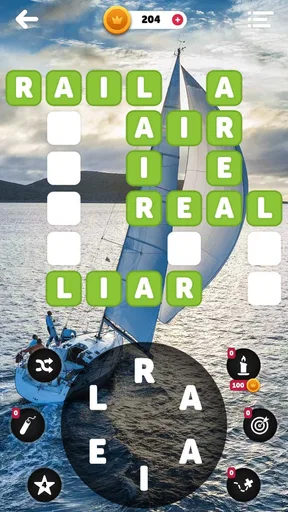
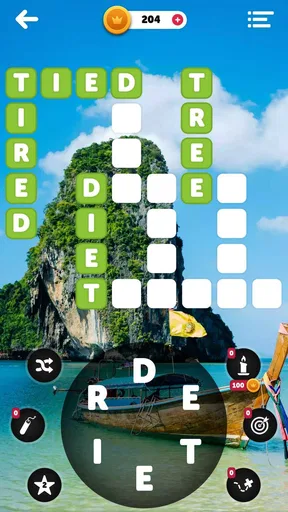
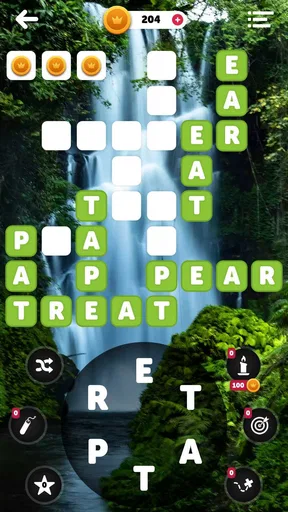
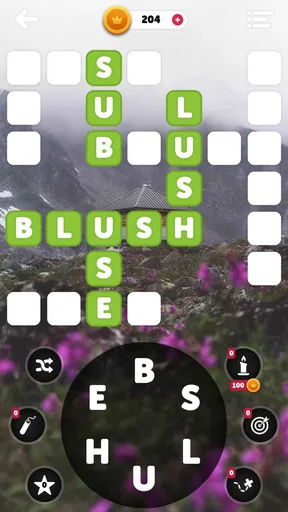
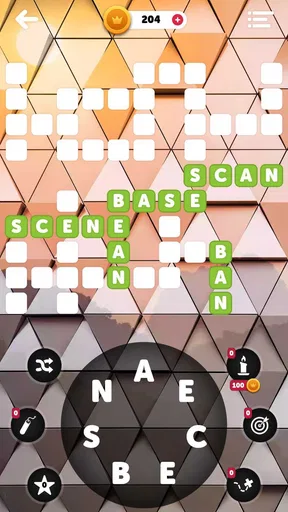
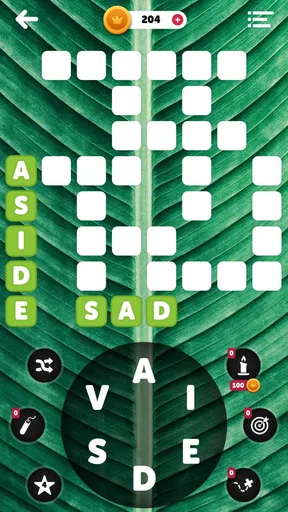
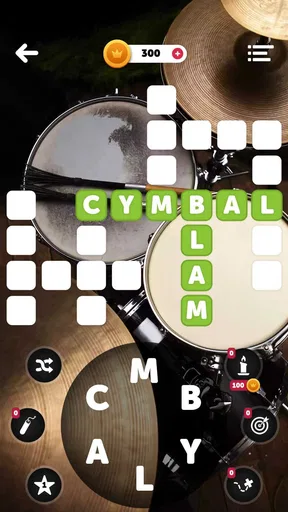
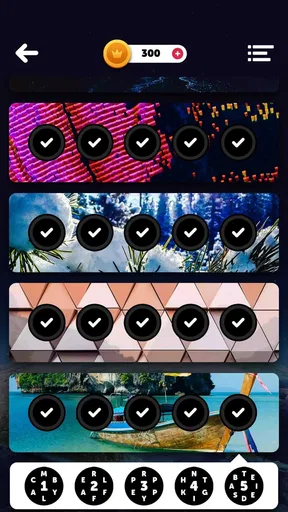
Our Review of Words of the World
 Analysis by Appyee
I enjoy word games most when they give me a reason to keep learning, rather than simply asking me to clear another board. Words of the World takes that approach by combining anagram puzzles with short pieces of general knowledge from different places. In my experience, that makes it a more interesting choice than a basic letter-scramble game, especially when I want something light enough for a short break but less repetitive than endlessly forming words.
This is a free word game from Random Logic Games, LLC, aimed at Everyone. It has reached over 100 thousand installs and holds a 4.6 average from around 3.9 thousand ratings, which suggests that its central idea connects with a healthy number of casual players. I would not treat those figures as a guarantee that every puzzle will suit you, but they do give the game a useful starting point: it is established enough to have been tried by a substantial audience, while still feeling like a focused puzzle rather than a huge all-purpose platform.
How the anagram format works in everyday play
The basic appeal is easy to understand. You work with mixed-up letters, search for the intended word, and then receive a piece of knowledge connected with the wider world. That pairing changes the rhythm of play. A difficult puzzle is not only an obstacle; it becomes a prompt to slow down and think about vocabulary, spelling, and associations. When I solve a word after several failed attempts, the following knowledge item gives the moment a little more payoff than a simple score increase would.
That structure also makes the game approachable for people who do not normally choose educational apps. You do not need to sit down for a formal lesson, memorize a long rule set, or understand a complicated interface before starting. The word challenge provides the immediate activity, while the knowledge element adds context around it. I find that combination particularly suitable for short sessions during a commute, while waiting for an appointment, or at the end of the day when I want something active but not demanding.
There is a useful distinction between this experience and a dictionary-style word game. A traditional word finder usually rewards speed, length, or the number of accepted entries. A crossword focuses more heavily on clues and crossing letters. A spelling game may be better for practicing a specific language skill. Words of the World sits between those approaches: its anagram solving is the main interaction, but the reward is designed to broaden the subject matter beyond vocabulary alone.
That makes the game more appealing to curious players than to people who only want competitive word scoring. If your favorite part of a puzzle is comparing times, building long streaks, or testing yourself against other players, this may feel less focused than a dedicated competitive alternative. If you like the small surprise of discovering something new after solving a word, its format has a clearer identity.
The knowledge reward changes how I approach hard puzzles
One of the less obvious strengths is psychological rather than technical. In many anagram games, a missed word feels like a dead end. Here, the promise of a fact from somewhere around the globe gives me a reason to keep working without making the game feel like a school exercise. I start trying different letter groupings, looking for familiar endings, and checking whether a shorter word might be the intended answer. The reward helps turn persistence into part of the experience.
I also recommend treating the knowledge portions as a reason to pause instead of tapping through them automatically. If you are playing while distracted, it is easy to regard them as decoration. A better routine is to solve a puzzle, read the information carefully, and then ask yourself what made it memorable: the location, the subject, or the unusual connection. That small habit gives the game more lasting value than simply racing from one anagram to the next.
For parents or educators, the age rating of Everyone makes the game easier to consider for a broad household audience. Still, I would present it as a casual learning aid rather than a substitute for structured vocabulary practice. The game can encourage curiosity and word recognition, but it is not the same as a lesson plan, a spelling curriculum, or a reference work. Its best use is as an inviting supplement that makes a few spare minutes more thoughtful.
What the free download actually means
The game is free to download, so you can try its central puzzle idea without paying an entry fee. That matters because anagram games are personal in a very immediate way: some players enjoy rearranging letters for hours, while others lose interest after a few rounds. Free access lets you decide whether the combination of puzzles and global knowledge fits your habits before spending anything.
There are in-app purchases ranging from $0.99 to $19.99 per item. I would therefore separate the value question into two parts. The free experience is worth judging on its own, because that is the part every new player can sample. Any purchase should be considered optional value rather than a reason to assume the game is automatically better. Before buying, I would ask whether the extra convenience or content solves a problem I actually have, instead of paying simply because I have already invested time.
That approach is especially sensible for a casual word game. If you only play occasionally, the free version may already provide enough entertainment for short breaks. A purchase becomes easier to justify for someone who returns frequently and feels that the game has become part of a regular routine. I would not recommend spending at the beginning, before you know whether the puzzle style, word difficulty, and knowledge rewards hold your attention.
The current version is 1.0.111, and the game supports Android 7.0 or later. Those details are useful when deciding whether an older device can run it. They also suggest that anyone using a phone or tablet with a much earlier operating system should check compatibility before planning around the game. On a supported device, the more important practical question is not raw performance but whether the presentation and puzzle pacing match your expectations.
Where the game delivers real value
The strongest value comes from the way it gives two kinds of satisfaction in one short loop. First, there is the mental click of recognizing the answer. Second, there is the small expansion of your knowledge afterward. Neither part needs to dominate. The anagram keeps the hands and mind occupied, while the information prevents the session from feeling like a purely disposable distraction.
I can see this working well as a personal reset between tasks. Imagine finishing a few work messages and wanting a break that does not pull you into a long video or an endless social feed. A handful of word puzzles gives you a defined activity with a natural stopping point. If one of the accompanying facts catches your interest, you can remember it or look into the subject later. If it does not, you can simply move on without having committed to a large time block.
It can also work as a shared, low-pressure activity. Two people can look at the same scrambled letters and suggest possibilities, with the knowledge reward creating a second conversation after the answer appears. This is different from a head-to-head word contest, because the point is not necessarily to prove who is faster. That makes it more comfortable for mixed-skill groups, where one person might have a larger vocabulary but another may contribute stronger general knowledge.
A further advantage is the global framing. Many word games stay inside the boundaries of spelling and word lists. By connecting answers with knowledge from around the world, this one gives the session a broader direction. I would not expect every fact to become a lasting memory, but the format creates more chances for a puzzle to lead into a subject you would not have encountered during a normal vocabulary challenge.
There is also value for players who want a gentler alternative to heavily competitive games. The concept does not require you to treat every round as a performance test. You can focus on solving carefully, use the knowledge as the reward, and stop when you have had enough. That calmer tone will appeal to people who find countdowns, rankings, and constant challenges tiring.
Small strategies that make the puzzles more enjoyable
My first practical tip is to stop staring at the letters as one unbroken group. I mentally separate possible beginnings, endings, and common letter combinations. Looking for familiar patterns often works better than trying every rearrangement at random. If the answer seems close but not obvious, I also check whether I am assuming the word must be longer or more complicated than it really is.
My second tip is to use the knowledge reward as a memory hook. After solving, connect the fact to the word you just formed. Even a simple association—such as linking the answer to a place, object, or idea—can make the information easier to recall later. This is a more effective use of the game than treating each fact as a disposable pop-up.
My third tip is to play in deliberately short sessions when the puzzles begin to blur together. Anagram games can become less satisfying when I keep going after my attention has dropped. Because the format works well in small intervals, stopping after a few satisfying solves is not a failure. It preserves the sense of discovery and makes it easier to return later without feeling that the game has turned into a chore.
For families, I would encourage players to discuss the answer before reading the knowledge item. That creates a natural two-step activity: solve first, then talk about what the reward adds. It also helps younger players understand that a wrong guess is useful information. They can compare letter patterns, hear alternative suggestions, and learn without the pressure of being graded.
The trade-offs I noticed before recommending it
The same simplicity that makes the game accessible can limit its appeal. Players who need deep strategic systems, elaborate progression, or a strong competitive layer may find the core loop too narrow. The game is built around solving anagrams and receiving knowledge, not around becoming a tournament-style word specialist. If your ideal session involves complex planning or constant novelty in the rules, a broader puzzle game may be a better fit.
Another trade-off is that the knowledge element may not have equal impact for everyone. Some players will enjoy learning a little about unfamiliar subjects; others may see the information as an interruption between puzzles. If you mainly want rapid-fire word solving, the educational angle could slow the pace you prefer. In that case, a streamlined word game with fewer pauses or a more competitive scoring system would probably serve you better.
The free-to-play structure also deserves a measured approach. Since optional purchases are present, I would avoid assuming that every useful convenience is included at no cost. The right decision is to play first, identify what you genuinely enjoy, and then decide whether a purchase improves that experience enough to justify the amount shown in the store. For a player who only opens the game once in a while, paying may add little practical value. For a regular player, it depends on whether the paid item addresses a recurring frustration.
Word difficulty is another personal dividing line. Anagram games can feel relaxing when the answers are familiar, but frustrating when the vocabulary moves beyond your comfort zone. That is not necessarily a flaw, because challenge is part of the format, yet it affects who will enjoy the game most. Players who dislike guessing unfamiliar words may prefer a crossword with explanatory clues or a spelling app that offers more direct guidance.
I would also be cautious about using it as the only tool for language learning. Rearranging letters can reinforce recognition and spelling, but it does not automatically teach pronunciation, grammar, conversation, or the broader meaning of every word. Someone actively studying a language would likely get better results by combining this kind of game with a dictionary, listening practice, and structured exercises. The app is strongest as an enjoyable supplement, not as a complete course.
Who is most likely to get their money’s worth
I think Words of the World is a good match for casual puzzle players who want their entertainment to have a small educational edge. It suits people who enjoy anagrams but sometimes tire of games that end at the score screen. It is also a sensible choice for curious adults, families looking for a simple shared activity, and anyone who prefers short sessions that can be stopped without losing a complicated campaign.
The free starting point makes it particularly suitable for cautious users. You can test whether the word-solving loop feels satisfying, whether the knowledge rewards interest you, and whether the pacing works on your device before considering an optional purchase. That is a better value proposition than committing immediately to a paid word title whose style you may not enjoy.
I would recommend skipping it if your priority is serious vocabulary training with detailed explanations, if you want a full crossword experience, or if you need competitive multiplayer and advanced statistics. I would also skip it if you already know that educational snippets interrupt your enjoyment of puzzle games. In those situations, a specialized alternative will be more efficient because it focuses directly on the feature you care about.
For someone who wants a quiet evening game, I would use it differently from a high-intensity challenge. I would play a small number of puzzles, read the accompanying knowledge carefully, and stop while the experience still feels fresh. That workflow takes advantage of its strongest feature—the combination of solving and discovery—rather than forcing it to compete with games designed for endless sessions.
My final recommendation
After looking at the whole package, I see this as a thoughtful free word game with a clear purpose. Its anagrams are familiar enough to understand immediately, while the global knowledge rewards give the activity more character than a standard letter scramble. The result is not a replacement for every other word app, but it fills a useful middle ground between casual entertainment and light learning.
The main question is whether you want that blend. If you do, the free access makes trying it an easy decision, and the Everyone rating supports sharing it across a broad age range. I would keep purchases optional until the game proves that it belongs in your regular routine. The presence of items priced from $0.99 to $19.99 means careful spending is sensible, but it does not remove the value of being able to sample the central experience first.
My verdict is to try it when you want a relaxed puzzle that can occasionally teach you something unexpected. I would recommend it to curious casual players, families, and people who appreciate a natural stopping point. I would steer competitive word experts and dedicated language learners toward more specialized tools. For everyone in between, the best value is in treating each solved anagram as a doorway to the knowledge that follows, not merely as another round to clear.
Verdict
Strengths of Words of the World
- Simple word puzzles are easy to learn for players of all ages.
- Vocabulary challenges help improve spelling and word recognition.
- Short levels make it convenient to play during quick breaks.
- World-themed progression adds variety to the puzzle experience.
- Offline play may be useful when traveling without a stable connection.
Limitations of Words of the World
- Some puzzles may feel repetitive after extended play sessions.
- Later levels can become difficult without hints or extra attempts.
- Hints and other aids may be limited by in-game resources.
- Frequent ads can interrupt gameplay, especially between levels.
- Players seeking competitive multiplayer may find the experience limited.
Other Releases by Random Logic Games, LLC
View All
Infinite Word Search Puzzles
Word4.7

Trivia Night
Trivia4.5
Similar Picks in This Category
View All
Word Search - Word Puzzle Game
Bluetile4.8

Word Search Quest - Puzzles
Blackout Lab4.8

CodyCross: Crossword Puzzles
Fanatee, Inc.4.7

Words of Wonders: Crossword
Fugo Games4.9

Wordscapes: Word puzzle game
PeopleFun4.7

Word Search Explorer
PlaySimple Games4.9
Frequently Asked Questions
What is Words of the World?
Words of the World is a word puzzle game focused on discovering and forming words from a set of available letters. Its travel-inspired presentation gives each group of puzzles a sense of progression as you move through different places around the world. The game is designed for casual play, with short levels that can be completed whenever you have a few spare minutes.
How do you play Words of the World?
In each puzzle, you use the provided letters to create valid words and complete the level. Some answers are immediately visible, while others require experimentation with different letter combinations. The game generally rewards vocabulary knowledge, pattern recognition, and patience. If you become stuck, hint features may help reveal letters or guide you toward an answer, depending on the version you install.
Is Words of the World free to download and play?
Words of the World can typically be downloaded for free, allowing players to try the core puzzles without paying upfront. However, free versions may include advertising, optional in-app purchases, or paid hint packages. Before downloading, check the store listing for the exact purchase details on your Android or iOS device, since pricing, advertisements, and available features can vary by platform and region.
Can Words of the World be played offline?
Many of the basic word puzzles may remain playable without a continuous internet connection, which makes the game convenient for travel, commuting, or areas with unreliable service. Nevertheless, an internet connection may be required for advertisements, purchases, synchronization, updates, or certain bonus content. It is a good idea to open the game online at least once and test offline access before relying on it.
Is Words of the World suitable for all ages?
Words of the World is generally suitable for players who enjoy vocabulary games, including older children, teenagers, and adults. The puzzles are usually easy to understand, although difficulty can increase as you progress. Parents should still review the app-store age rating and privacy information, particularly because advertising, optional purchases, or external links may be present. The appropriate experience can also depend on a player's reading level and vocabulary.
Play our best games!


